Hotels in Palmyra
Ancient oasis city in the Syrian desert, UNESCO heritage.
Homs
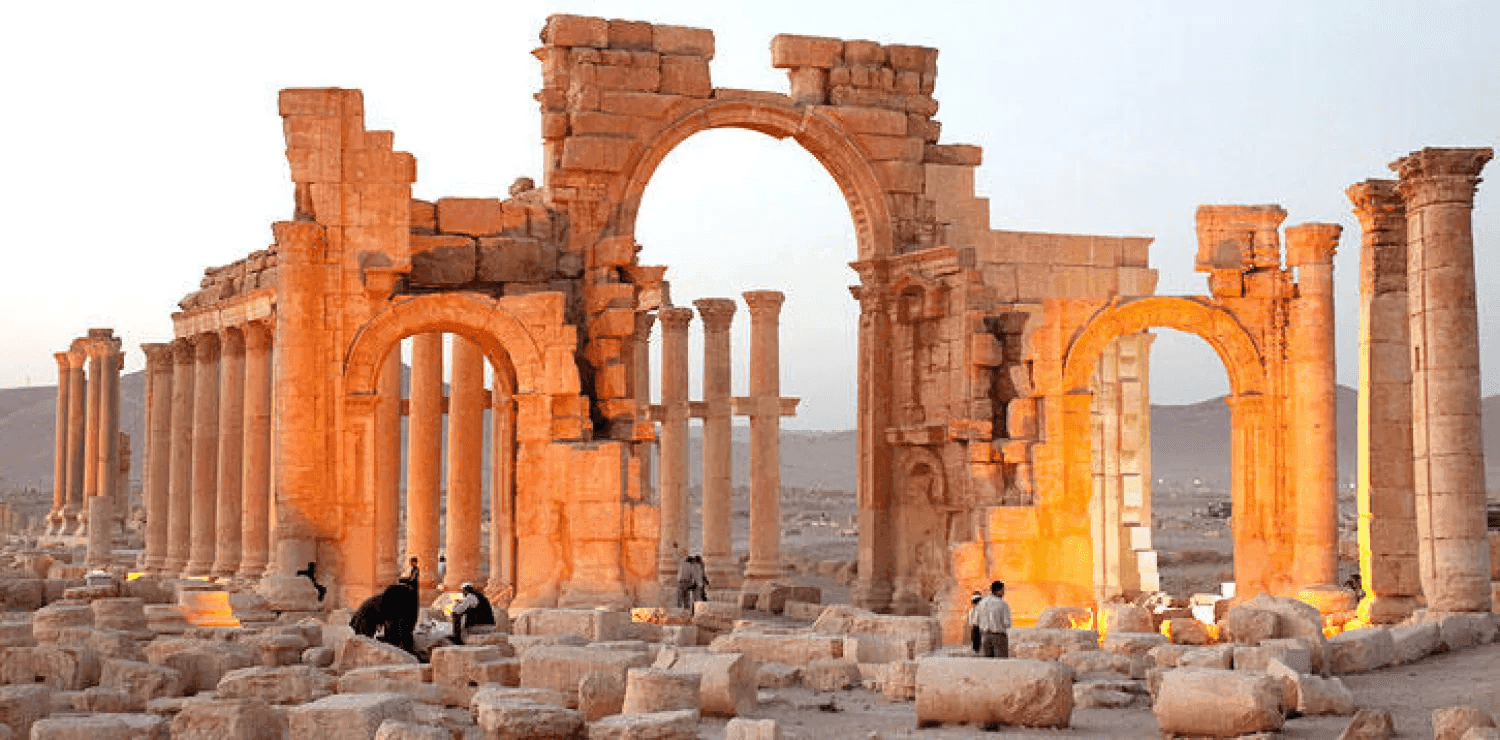
Palmyra is one of the most extraordinary archaeological sites in the world — a vast Roman city rising from the Syrian desert. The Temple of Bel, Arch of Triumph, and the Valley of Tombs are awe-inspiring UNESCO World Heritage treasures.
We are adding hotels, apartments and restaurants city by city. If you run a place here, list it free and be the first to appear.
Palmyra (Tadmor) is an ancient city in the heart of the Syrian desert, a UNESCO World Heritage Site. It was the kingdom of Queen Zenobia who challenged the Roman Empire.
The Temple of Bel, the Arch of Triumph, the Great Colonnade, the Valley of Tombs with its funerary towers, Fakhr al-Din Castle, and the Palmyra Museum.
Palmyra is approximately 240km from Damascus, about 3 hours by car through the desert road.
Spring (March–May) and autumn (October–November) are ideal. Summers are very hot (+40°C) and winters are cold at night but pleasant during the day.
Stories and tips from the Syria guide to plan your visit.
 Places
Palmyra, the caravan city that defied Rome: the colonnade, theatre and Valley of the Tombs, what survives, and how to visit from Homs.
 History & culture
Syrian women who made history: Zenobia, Julia Domna, Mary Ajami, Nazik al-Abid, Colette Khoury, Ghada al-Samman and the singer Asmahan.
History & cultureJane Digby, the English aristocrat who married Sheikh Medjuel on the road to Palmyra and lived between Damascus and the desert until 1881.
Travel tipsA 7-day Syria itinerary: Old Damascus, Maaloula, Krak des Chevaliers, Hama and Apamea, and Aleppo — where to stay and how to get around.
 Travel tips
Getting around Syria: Pullman buses, serveece and taxis, distances between cities, and when a rental car or a car with a driver is best.
Travel tipsMoney in Syria 2026: the new pound after two zeros were removed, cash and cards, official exchange, and how you pay for bookings on Bytnaa.